“Taking on investment is the start of a new relationship”: Creative UK’s Portfolio Team on what happens after investment
// creative growth finance // investment // Production
Securing investment is a major milestone for any business. But what happens after the deal is done?
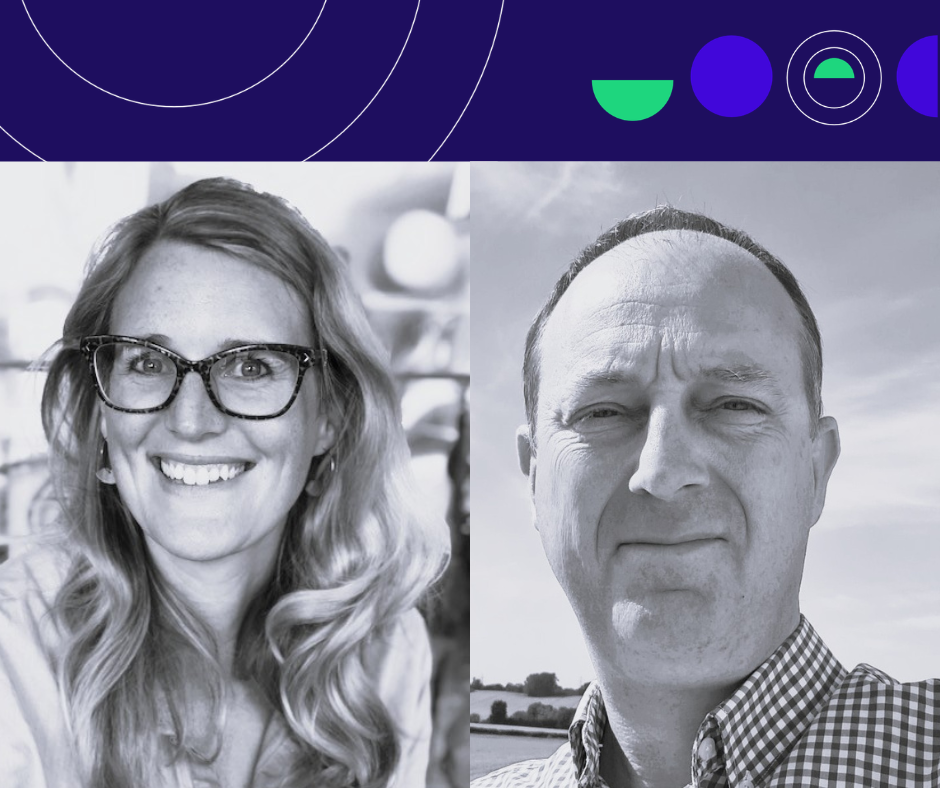
We spoke to Hannah Long and Nick Simmonds, Portfolio Managers at Creative UK Investments, about the realities of growth after investment, the challenges creative businesses face as they scale, and the lessons they’ve learned from working closely with founders across the Creative Growth Finance portfolio. Drawing on real-world examples from businesses they’ve supported, they share their insights on everything from cash flow and hiring to leadership, governance and sustainable growth.
Hannah Long and Nick Simmonds, Portfolio Managers, Creative UK Investments
Hannah Long: The first thing is building trust. Before receiving investment, businesses will have spent a lot of time working with their investment manager, and then they’re handed over to a portfolio manager. It becomes our job to build that relationship and understand the people behind the business.
Unlike traditional lenders, it isn’t a sink-or-swim setup where you take the investment and only hear from us if something goes wrong. It’s much more of a partnership.
For example. in the first month following investment, we meet with the founders and FDs to ensure businesses understand what is expected of a CGF portfolio company, both contractually and in terms of best practice for financial reporting and Board Meetings. That way, we start as we mean to go on which makes the partnership journey a lot smoother when each party knows what they can expect from the other.
We’re having regular conversations about what’s going well, what’s challenging, what they’re worried about and what they’re celebrating. We review management information every month, but the narrative behind the numbers is just as important. If revenue is lower than forecast or costs are higher than expected, we want to understand why.
Transparency and trust are what make those relationships successful. If we’ve got that transparency, we can often see the bumps in the road coming and support a business before the horse has bolted.
Nick Simmonds: Fundamentally, my role is to build and maintain positive relationships with the founders we invest in.
At the highest level, that means understanding what they’re trying to achieve and how they’re planning to get there. Then we look at performance against plan. Progress rarely happens in a straight line, but does the overall direction of travel give rise to optimism? If it does, that’s great. If it doesn’t, let’s talk about why and what might need to change.
At a practical level, part of the role is also making sure businesses understand what’s expected of them after investment and monitoring compliance with the terms of the contract. We also review financial reports, KPIs and cash flow. Because we invest through a venture debt product, we also need to understand whether the business can comfortably meet its repayments. But all of that is predicated on the quality of the relationship we build with founders.
Nick: Creative businesses are generally run by very savvy people, so founders know there will always be another challenge around the corner.
What can be new is receiving a significant injection of growth capital. Founders have spent months planning how they’ll use that money and explaining those plans to investors. Once the funding arrives, they suddenly have the opportunity to make those investments. The challenge is that the outcome is never completely known.
Hannah: I’d say it’s the increased accountability.
A lot of founders are so focused on getting investment over the line that all their time and energy goes into the process. Then suddenly the investment lands and there’s a new pressure. You’ve got the funding, but now you’ve got to do what you said you were going to do.
That often means stronger governance, better reporting, more structured internal processes and sometimes a board structure that wasn’t there before. For businesses where founders have been wearing multiple hats, it can feel like everything has become much more grown up overnight.
It’s all there to help sustain growth, but it can be a big adjustment for businesses that haven’t worked that way before.
Nick: As businesses grow, they need stronger teams and processes. Having a finance function that’s fit for purpose is really the only way of understanding your cash flow cycle and knowing where the cash is.
One business we worked with had a relatively long product delivery cycle that required significant working capital. They helped manage that by taking deposits up front to fund part of the requirement and by making sure there was someone responsible for actively managing debtor collections and getting invoices paid on time.
Hannah: Entrepreneurs are often optimists, and this positivity and belief really helps to get great ideas off the ground. However, it is important to counterbalance this with a strong financial controller or FD who really gets the numbers and who is more than happy to get their head under the bonnet of a business.
A strong FD in place will bring a more cautious perspective, but this results in more realistic and reliable cash flow forecasts, tighter control on spending and ultimately, a more resilient business.
One company ran into cash flow difficulties and responded by reducing its reliance on permanent staff and leaning more heavily on freelancers. They built a strong core team and then brought in additional resource when projects required it. That flexibility ended up working really well, and they were in fact recently acquired, which was a great result for them.
The other lesson is not to bury your head in the sand. A reliable cash flow forecast should help you spot pinch points well in advance and give you time to put a plan B in place.
That also applies to conversations with investors. If we’re aware of a challenge early and a business is being transparent about what it needs, it’s much easier for us to provide support than if we’re only finding out once the situation has become urgent.
Nick: Delegation, recruitment and governance are all challenging for growing businesses.
Governance comes first because it establishes where decisions are being made, who’s making them and what checks and balances are in place. From there, it’s about building the right team. Recruitment can be hit and miss, but founders need to think carefully about the structure they need and hire the best people they can afford into key roles.
Once you’ve hired great people, you have to trust them and delegate. Otherwise, what’s the point in building the team?
Hannah: We’ve worked with founders who have grown businesses very organically, where everybody knows everybody and people have effectively grown up with the company.
One business brought in a managing director who took ownership of day-to-day operations, finance and investor conversations. That took a huge amount of pressure off the founder and allowed them to go back to what they were genuinely best at: building relationships, working with their network and focusing on the creative side of the business.
Another important realisation is that the team that got you to where you are today might not be the team you need for the next stage of growth. Recognising that, accepting it and then doing something about it can be one of the hardest parts of scaling a business.
Nick: The specifics vary from sector to sector, but one thing remains constant: founders need to be clear about their value proposition and continually improve it. What sets you apart from the competition?
For businesses with long development cycles, the challenge can be funding significant amounts of work before there’s a commercial product or revenue stream. That’s something we often see in parts of the games and immersive sectors. Founders need to be able to clearly articulate why they’re backable and why investors should support the journey.
Hannah: We’ve seen some interesting examples across the portfolio.
One company was heavily reliant on a large annual contract. As they scaled, the challenge wasn’t just delivering that contract to the standard expected by the client, it was finding enough time and resource to build a broader customer base at the same time. Diversification becomes very important when such a large proportion of revenue comes from one source.
We’ve also seen agency-style businesses having to commit significant time and resource before contracts are formally signed because that’s simply how parts of the industry operate. That can place pressure on both resources and cash flow.
In visitor attractions and entertainment businesses, seasonality can be a major factor. Demand can be influenced by things as simple as weather patterns, school holidays and visitor trends. Those external factors create very different challenges from those faced by an agency or a studio.
Hannah: One founder told us they had completely changed their definition of success.
When they first received investment, success meant growing quickly, building a bigger team and becoming known as a fast-growing business. Then they lost a major client and were forced to make some very difficult decisions.
Today, that business is actually leaner, more focused and in a much stronger position. The founder realised that success wasn’t necessarily about getting bigger. It was about building something sustainable, acting with caution, having good governance in place and really understanding where money was being spent.
I’ve also seen founders become much more aware of the responsibility they carry. As a team grows, you realise you’re responsible for a lot of people’s livelihoods. That’s the kind of thing that keeps founders awake at night and changes the way they think about leadership.
Nick: At the early stage, founders tend to drive every aspect of the business.
What impresses me most is when founders retain the ability to think strategically while still dealing with the day-to-day demands of running a company. The best founders recognise opportunities, seize them and gradually evolve their role as the business grows.
Not everybody can make that transition. The founders who do tend to surround themselves with good advisers, build highly capable teams and seek advice before challenges become bigger problems.
Nick: The businesses that scale most successfully tend to be led by founders with deep sector expertise. They understand their industry, they understand their customers and they have a clear sense of where they want the business to go.
They also embrace the job of building teams, managing performance and focusing on the strategic direction of the company rather than trying to do everything themselves.
Importantly, they pay attention to the numbers and are willing to change course when circumstances require it.
Hannah: The strongest businesses usually have really tight financial control. They’ve invested in a strong finance function, they’ve got good governance in place and they follow best practice.
They’re also willing to listen. Every business goes off plan at some point. The difference is that successful founders acknowledge it quickly and do something about it. They are self-aware and won’t surround themselves with “Yes” people. They have a board that will both challenge them and support them, offering expertise and insight that they don’t already have.
And honestly, transparency is a huge factor. The earlier a founder is willing to talk openly about challenges, the easier it is for investors, advisers and the wider team to help.
Nick: Taking on investment is the start of a new relationship.
Like any relationship, it requires work. The quality of the relationship between founder and investor is incredibly important, and open communication sits right at the heart of it.
Hannah: I’d say two things: be transparent, and embrace the chaos.
Growth isn’t linear. Things will go right, things will go wrong and very few businesses follow their plan exactly as it was written.
If you’re off plan, don’t ignore it. Understand why, decide what you’re going to do about it and move forward. That’s far more important than pretending everything is fine.
The founders who get the most from investment are the ones who communicate openly and are willing to adapt when circumstances change. That’s what leads to real, sustainable growth.
To speak to Hannah about your business and your investment needs, click here: Get in Touch
For further information on Creative Growth Finance and to find out if your business is eligible, visit www.wearecreative.uk/support/creative-enterprise/investment/creativegrowthfinance