“It takes a fan to make a fan-based game”: Nomad Games on building a business around games people love
// creative growth finance // investment
Investment Case Study
How do you turn a much-loved board game into a digital experience that keeps players coming back for more?
For Nomad Games, it starts with understanding what players love, and knowing which parts of the experience to leave alone. From Talisman to its recently announced digital adaptation of HeroQuest, the studio has built its business around bringing established tabletop games to digital audiences.
We spoke with new CEO, Tomas Rawlings, and chair of the company board, Don Whiteford, discussing the commercial opportunity behind digital tabletop gaming and an investment journey stretching back to 2013. They also share what it takes to bring a beloved game to digital audiences while retaining the trust of its loyal community.
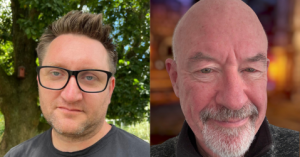
Tomas Rawlings and Don Whiteford
Creative UK: What originally attracted you to bringing tabletop games and gamebooks to digital audiences?
Don: When I was originally at THQ, I set up a research development unit to look at the space for digital-only delivery of games and what that might mean for games and scales of development.
At the same time that we were exploring that, we’d seen the success of Ticket to Ride Digital, which was a transliteration of a world-leading board game. It was a clear message that players would engage with physical and digital versions in large numbers. One wasn’t cannibalising the other; the digital version was actually helping them expand the physical side of the business.
We could see there was possibly the start of a growing trend where we were starting to unify two different worlds of gaming, the physical world of gaming, tabletop, and the digital video games. We thought, well, that’s an interesting space to be. We can be in two places where players are.
Creative UK: How do you approach taking a much-loved tabletop experience into a digital format while staying true to the original game?
Don: The process with this starts with the love of the game itself. You’ve really got to have someone on board who loves that game, who knows it. It takes a fan to make a fan-based game.
If you slow their game experience down too much with video game frills and so forth, that’s often a turn-off for a tabletop fan because they can move a playing piece across the board in a second and they want to be able to do that also in their digital games. So you have to understand not only the mechanics of the game, but the way that people play it and make sure that you don’t get in the way of that experience.
Tomas: We might all have different reasons why we’re into a thing. So as well as us being fans of it, we also have to try and understand that broader frame of what it is that people love about it.
Creative UK: We first invested in Nomad Games in 2013 to support the launch of Talisman. What impact did that investment have?
Don: It’s fair to say it was a pretty huge impact. It’s always a challenge to find the finance to take things forward. We were very fortunate in coming across Creative UK because their objective is to see growth in our sector and to support the creative industries.
When we were pitching for the money, we had to go in front of their investment panel. Their investment panel had very important key people from the games business working with them, for example Jason Kingsley from Rebellion was there. They were people who understand the industry.
We knew early on that this was an organisation that was getting behind the creative product, not just the numbers, but actually what it meant as a company for growth and for development as a creative business.
They’ve been essential to our position now, and they still are.
Creative UK: What does it mean to have an investor relationship that has lasted for more than a decade?
Don: Creative UK have both feet in our industry. I think that made it easier to go back the next time. We’ve had several rounds now, to the point where eventually they said, how about we invest in you on the equity side?
Creative UK has been in it for the long term. That is one of the key things, because it takes time to build. There’s ups and downs. It takes a particular type of investor to see through that and see where you’re going, and treat things that didn’t work as experience that builds on the next possible success.
They have a position in the company and we have a board observer, Jackie Boyd, who’s with us every month. They are integrated into the company structure. That’s how close it’s become.
They want to see us succeed. They’re supporting, they’re not dominating. They’re behind us and not on top of us, which is what can happen with some investors.
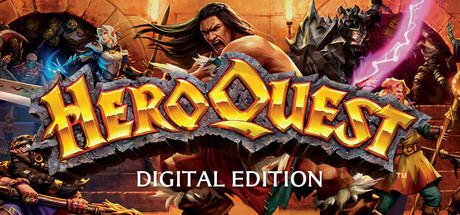
Nomad Games’ upcoming release, HeroQuest Digital Edition
Creative UK: Congratulations on announcing your digital adaptation of HeroQuest. How did it come about, and what does it mean to bring it to players?
Don: In our history, we’ve learned that the things that work best are the things that do have a solid and established core fanbase. HeroQuest is about the same vintage as Talisman. They shared a very similar audience at that time.
Avalon Hill produces the new generation of the Talisman tabletop game, and also has HeroQuest in their stable. It was a natural thing for them to say to us, you know this audience, you know this type of game. What do you think about bringing HeroQuest to digital?
The other key thing about these products is they’re not just a game. These are game systems and therefore they become hobbies. You have a core game and then you can buy add-ons or expansions or extra cards that change to some degree the nature of the gameplay and present fresh challenges.
That’s how you get that long-term devoted fanbase. It’s a very precious thing to be dealing with. I’d say it’s an honour to bring it to that audience.
Tomas: Our job here is to make HeroQuest a game that more and more people can play. Digital versions have a couple of advantages there. You can play it multiplayer with people in different parts of the world. You can play it solo. Also it doesn’t replace the physical version. It augments it and builds on it.
Our hope is that the game will be well received by players and it will allow us to bring across all the other content that exists for HeroQuest. The responsibility to steward this game into the digital realm is something we take very seriously.
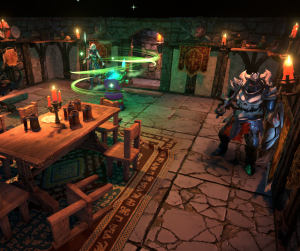
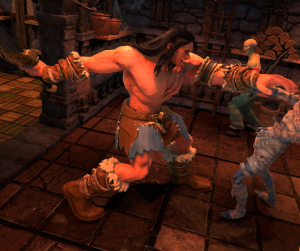
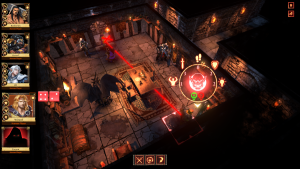
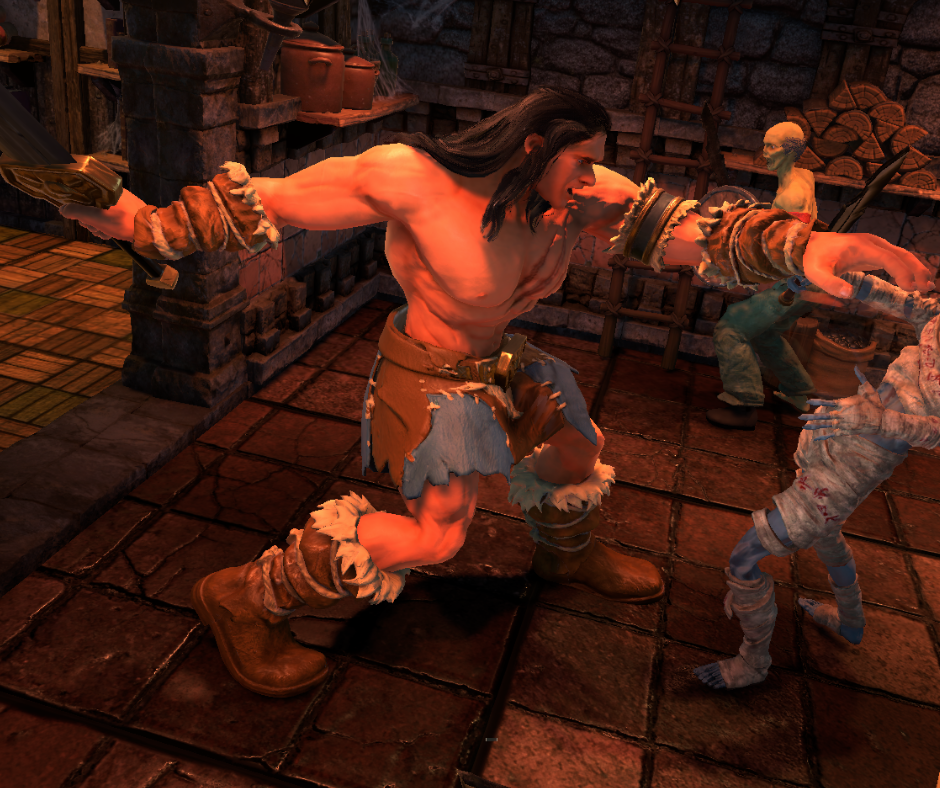
In-game screenshots: HeroQuest Digital Edition
Creative UK: You’re currently both supporting established games and launching a new one. Is there a difference in approach when it comes to engaging those communities?
Tomas: A lot of the stuff is similar: bringing out a good game, making that game true to the vision of what you’re trying to do, engaging with your community, listening to what they want, where possible updating, adding features.
We’re not reinventing the gameplay. It is the HeroQuest board game. Our goal really is to take a lot of the calculation, the rules lawyering, those things that you have to do if you’re playing a board game, and we automate a lot of that, but then we also have to make it clear to the player what’s going on.
What’s exciting about HeroQuest is there are decades of legacy with the game. So the scope for us to be adding a lot more stuff into it is huge.
Creative UK: With Tomas becoming CEO and Don moving into the chair position, what does this new chapter mean for Nomad Games?
Tomas: Don has built a really incredible team. There’s a lot of really talented people. Nomad had some great IPs, obviously Talisman, now we’ve got HeroQuest announced. It’s a great position to build from.
How do we take these great IPs that we’ve got, how do you take this great player community that Don and the team have been building up for years and allow that to really grow?
Don: Tomas and I have known each other for a long time. I’ve watched him grow his business, Auroch Digital. We’ve shared this common ground and I’ve wanted to work with Tomas for a long time. Tomas is just the right guy to come in at this point, the pivot point where we’re starting to see some huge potential for growth.
Tomas: I see lots of potential because of the type of games we make, because they have this real resonance with an audience. If you played HeroQuest when you were younger, it’s not like you want a thing that’s vaguely like HeroQuest. You want HeroQuest. I think we’re in a good position to deliver that.
Creative UK: What advice would you give independent game studios looking to build a sustainable business?
Tomas: Making a sustainable creative business is often very hard. You as a business might spend an amount of time making a game, and then it releases. When it’s released, you’re getting revenue. For most games, initial sales are really high and then they drop into a long tail.
Ultimately, it’s understanding your cash flow. How’s that going to work? How are you going to make sure you pay everybody? How are you going to sustain yourself from that?
With a creative business, it’s getting that loop right. Is the game good? Is it fun? Is it going to compete? Are people going to like it?
You have to simultaneously do the crazy out-there stuff while also the boring, straightforward stuff in order to make a creative business work.
Don: Very early on, make sure you’ve got someone who’s capable of managing finance. A finance manager is someone who can look after the numbers and can wave the flag when there’s something to worry about.
I’m from the creative side, so I’m probably too chaotic to really keep a tab on that. Get someone in for the numbers early on.
Add HeroQuest to your Steam Wishlist today: Click here
To learn more about Nomad Games and their titles, go to https://nomadgames.co.uk/
Learn how Creative Growth Finance can unlock your growth today.