Why cultural strategies are essential to growing our regions
// creative industries // Creative UK // culture

Creative businesses often start with a strong idea, but turning that idea into something investable takes more than ambition. For founders looking to grow, the challenge is showing that their vision can become something structured, sustainable, and ultimately fundable.
We spoke to Tom Sweetsur, Investment Analyst at Creative UK Investments, about how his background shapes the way he works with founders, what signals real growth potential, and how businesses can prepare themselves to secure investment.
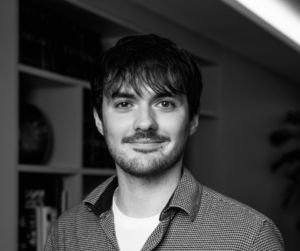
Tom Sweetsur, Investment Analyst, Creative UK Investments
My background is in accounting and finance. I started in audit and then moved into wealth management. Both roles were very detail-focused, which gave me a strong sense of financial discipline and a habit of looking beyond the numbers to understand what is really driving performance.
Now, working with creative businesses, I apply that same approach in a much broader context. It is not just about analysing financials. It is about understanding how value is created, often in ways that are not immediately obvious.
A big part of my role is listening to founders, understanding their ambitions, and helping translate their vision into something that makes sense from an investment perspective. It is about combining a structured financial lens with an openness to what makes each business different.
I have always been interested in film and TV, especially the process behind how projects get made and financed. Seeing that side of things has given me a much deeper appreciation for how complex those industries are.
I am also interested in gaming and the wider arts. Living somewhere with a strong cultural scene helps as well. It all makes it easier to connect with the kinds of businesses we work with and understand what drives them.
At an early stage, especially with creative SMEs, revenues can be uneven. Because of that, we are often investing as much in the founder as we are in the business itself.
The strongest signal is the founder’s judgement and resilience. Creative industries can be unpredictable, so the ability to adapt, make difficult decisions and keep moving forward is really important.
It also helps when founders understand where value sits in their business. That might be in intellectual property, brand, relationships or how well they execute. The ones who stand out tend to balance creativity with commercial awareness.
Operational discipline matters too. Businesses that understand their costs, manage cash carefully and have processes they can repeat are in a much better position to grow. Growth becomes more convincing when success is not just a one-off, but something that can be built on.
Credibility is less about how ambitious a plan is and more about whether it feels achievable.
A strong growth plan is grounded in reality, with assumptions that can be backed up by evidence. That could be past performance, a clear pipeline, or signs of real demand in the market.
The most convincing plans usually build on what a business already does well. Expanding into familiar markets or strengthening existing relationships tends to be more realistic than moving into something completely new without a track record.
From a lending perspective, it is also important to understand how that growth turns into cash. It is not enough to grow on paper. You need to show how and when that growth becomes cash flow, and whether it supports the business day to day.
It is also reassuring when founders have thought about what could go wrong. If revenue is delayed or costs increase, how does the business cope? Being able to answer those questions clearly builds confidence.
Financials are essential. You can have a great idea or a strong creative product, but if the numbers do not hold up, it becomes very difficult to secure funding.
Looking back, financials show how the business has performed. They help us understand how consistent revenues are, how efficiently cash is managed, and how the business operates.
Forecasting looks ahead. It sets out where the business is going and how it plans to get there. It does not need to be perfect, but it should make sense. A good forecast clearly explains how revenue will be generated, how costs will grow, and how investment will support that growth.
It also shows discipline. Founders who keep their financials up to date and revisit their forecasts regularly demonstrate a level of control that is important when scaling.
In the end, financials and forecasting give investors confidence. They help answer questions about resilience, sustainability and whether the business can support investment.
I would think of that 12-month period as building a foundation for credibility.
Start by really understanding your market. Where is your demand coming from? Who are your customers? Why is your business well placed to win work? That level of clarity is important.
Next, focus on telling a clear and consistent growth story. Investors need to understand not just what you do, but how you grow, where your margins come from, and how your plans connect to your numbers. Everything should line up.
It is also important to build strong financial foundations. That means having clean, reliable reporting and forecasts that are regularly updated. If you can show some level of predictability in your revenue, that helps a lot.
Finally, do not overlook the basics. Good governance, accurate records and keeping on top of filings all show that a business is well run and ready to be taken seriously.
Most importantly, you do not need to be perfect. Every business has its challenges. What matters is being honest about them, understanding the risks, and showing how you plan to deal with them. That is what builds trust and makes investors more comfortable backing you.
To speak to Tom about your business and your investment needs, click here: Get in Touch
For further information on Creative Growth Finance and to find out if your business is eligible, visit www.wearecreative.uk/support/creative-enterprise/investment/creativegrowthfinance