‘Single Front Door’: New reports from Creative UK explore how UK Government could further support investment in creative industries
// policy // Reports
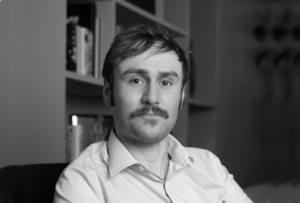
Nick Donaghy joined Creative UK Investments as an Investment Manager in 2024, bringing extensive experience from the corporate banking and SME finance world. Nick works closely with founders and leadership teams in creative businesses across the UK, helping them access the growth finance they need and guiding them through the challenges of scaling in a fast-moving sector.
In this conversation, Nick shares insights on what excites him about the creative industries, the unique nature of investing in creative companies, and the lessons he’s learned working with ambitious founders.
Tell us a bit about yourself, your background, and your interests.
Professionally, I come from a corporate banking background. I started on an apprenticeship with NatWest in the Yorkshire team, then moved into mid-corporate banking. Later, I joined Santander in their large corporate division covering Yorkshire and the North East. After that, I moved into SME investment with FW Capital. That role was similar to what I do now because it involved assessing businesses, understanding their financials and getting to know management teams, although it was sector-agnostic. One day I might be looking at a marketing company and the next at a window manufacturer. It taught me a lot, but it did not always connect with anything I felt personally invested in.
Outside of work, I am very rooted in creative worlds. I have played guitar for nearly 25 years and still try to practice for an hour a day. I read and write a lot, and I watch a huge amount of film and TV. When the opportunity came to join Creative UK Investments, which works directly with creative businesses, it felt like a rare chance to combine my professional experience with my personal interests.
What first excited you about working for Creative UK Investments?
The most exciting aspect was the chance to work with SMEs in a much more personal and meaningful way. Traditional lenders can sometimes rely on automated decisions. They gather financial data, press a button and get a yes or no. Our approach is very different. We spend time with founders and senior teams, and we make an effort to understand the story behind the numbers.
I also noticed straight away that many people in the team have creative backgrounds of their own. We have former film editors, actors, musicians and people who have run production companies. That experience matters because it means we understand the details behind the businesses we invest in. When a founder talks about a game mechanic or a VFX pipeline, we actually follow what they mean. It is unusual to find this level of sector understanding in the investment world, and it gives us a real advantage.
What’s the most rewarding part of your work?
Helping founders access finance that they might struggle to secure elsewhere is by far the most rewarding part. Creative businesses are often underserved by mainstream lenders, even when they are doing impressive work. Being able to say that we understand their model, recognise the risks and still believe in their potential is incredibly satisfying.
I also enjoy the end-to-end nature of the work. At larger banks you might handle only a small part of the process. Here, you work closely with founders from the first conversation all the way through to the final approval. It feels personal and you can clearly see the impact.
What is unique about investing in creative industries?
The biggest difference lies in how creative businesses are structured. Many of them are service-based and rely heavily on people. Talent is usually the main cost. They rarely hold significant stock or property, and their IP is often intangible. That means the balance sheet usually carries less value than you would see in a more traditional sector. As a result, many lenders struggle to secure against anything tangible.
Because of this, we place much more emphasis on the commercial proposition. We often assess the value of an idea or judge the potential of work that has not launched yet, such as a new game or immersive experience. Sector experience becomes essential at this point. If you have seen dozens of studios, agencies or VFX teams go through similar journeys, you can make an informed judgement about what is viable.
Creative industries are also highly dynamic. Consumer tastes change quickly and technology evolves at an even faster pace. Businesses in this sector must stay alert and be able to adapt in a way that many traditional industries do not have to consider.
What challenges do creative founders raise most often?
The most common challenge by quite a distance is generative AI. It comes up in almost every conversation, particularly in areas such as graphic design, copywriting, VFX, architectural visualisation and video content. On one side, AI allows competitors to reduce costs and undercut prices, sometimes quite dramatically. On the other, it can be used positively by helping teams automate repetitive tasks so they can focus on higher-value work.
Beyond AI, the wider theme that sits underneath these conversations is adaptability. Changes of this scale can force creative businesses to rethink their offer, reposition their services or identify new gaps in the market.
We have seen companies in our portfolio make these adjustments, whether by shifting from pure product development to service provision or by refocusing on other areas that bring clear value. Markets move quickly, and creative businesses that thrive are usually the ones that can adapt with confidence.
What one piece of advice would you give to any creative founder who is looking for growth finance?
The most important thing is to have a forecast model and a clear business plan. It sounds basic, but many companies, including very talented creative teams, do not have one. A forecast model helps funders understand where the business is heading, but it also shows that the founder is tracking performance and thinking ahead.
If someone does not have the financial expertise to build a model, that is completely fine. It simply means they need to bring in a finance professional or a fractional CFO. Although it requires an investment, it is an investment that pays off. Every funder, whether debt or equity, will expect to see a forecast model.
Fundraising without one is essentially like trying to navigate without a map. Even if you choose not to raise finance in the end, the model is still valuable because it helps you run the business and understand how performance aligns with expectations.
To speak to Nick about your business and your investment needs, click here: Get in Touch
For further information on Creative Growth Finance and to find out if your business is eligible, visit www.wearecreative.uk/support/creative-enterprise/investment/creativegrowthfinance