“We just knew we wanted to build something really weird”: The Story of Wake The Tiger
// creative growth finance // investment
Investment Case Study
What happens when you take the storytelling ambition of a five-day festival and try to turn it into a permanent, scalable business?
For Luke Mitchell and Graham MacVoy, co-founders of Wake The Tiger, it meant building something that defied explanation, taking significant risks, and rethinking what an immersive experience could be.
In this interview with Creative UK, they share how they navigated the realities of funding and growth, and scaled a completely original concept in Bristol to a second site in London. From balancing creative ambition with commercial pressure to building a business without a blueprint, their story offers a candid look at what it takes to turn bold ideas into something real.
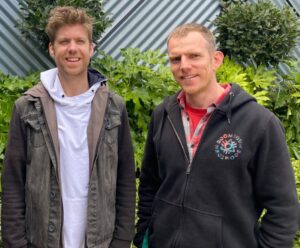
Luke Mitchell and Graham MacVoy
Creative UK: What was the original vision that you had for Wake The Tiger?
Luke: It goes back two decades into the Boomtown journey. Boomtown is a five-day music and arts festival with a real focus on storytelling and creativity. It’s been an amazing journey and we learned a huge amount, really understanding our creative expression and how we can use storytelling to inspire people to shift perspectives towards a world that can be more harmonious for all.
When COVID came in and the festival was forced to cancel, Graham and I dove straight into the idea of creating an all-year-round version of that creative narrative and expression.
We took music out of the mix, which was a huge thing, because music labels you as a certain type of experience. We even took theatre out, because that can narrow your audience as well. So we were like, let’s just build something that tells stories that feel really true to us.
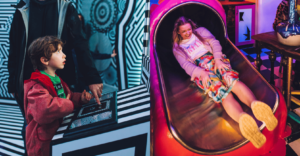
We came up with what felt like a completely original concept. We couldn’t even explain what it was. We just knew we wanted to build something really weird. We coined this idea of an “amazement park”, a maze, but amazing, somewhere between a theme park, an art experience, and a gallery.
We were building all these different worlds, often from scrap, really wanting to show that you can make beauty through recycled materials. The more weird and abstract and surreal we went, the more exciting it was.
Graham: One of the key things from the festival is that we build it and then take it down every year. This was about creating something permanent, something that could appeal to that wider demographic, not just the festival audience.
It wasn’t easy. We had quite a few different ideas and routes, but once we got that core idea, it was quite organic. We were designing and building at the same time. And we went all in. We didn’t even have all the cash. We’d get £50,000 or £100,000 in and just use it to push the build forward. There was a real belief that it was going to work.
Creative UK: So you were building something that didn’t really exist before. How did you approach it without an established business model?
Graham: Luke’s sold tickets for decades, so one of the first things was keeping ticket prices as low as possible, making it affordable. I think it was under £20 initially. The idea was to get volume in, because user-generated content was critical. Without volume, you trip yourself up.
Luke: There’s no blueprint at all. And especially now as we scale, we’ve redone the organogram most weeks, just figuring out how it all fits together. We’re fusing together multiple industries, film, theme parks, temporary events, immersive experiences, and construction. Each of those has different ways of working, different efficiencies, and different expectations.
It’s brilliant because people bring different approaches. One group will say, “we build like this”, another will adapt it. But it’s also challenging. You’re balancing efficiency, budgets, safety, and creative expression all at once.
With film, for example, they build incredible sets, but they’re temporary. They don’t need to be interactive in the same way, and they don’t need the same kind of tech integration. We’re also building new IP, new story worlds, which adds another level of complexity.
Creative UK: At what stage of this process did Creative UK come in, and what did that investment unlock?
Graham: Creative UK came in during our second phase. We’d been open about a year and were building an upstairs section. We wanted to minimise dilution, so we brought in debt partners, Creative UK and Bristol & Bath Regional Capital. One of the key benefits was proving that we were a business that could pay back debt and effectively build a credit rating. That was really important for future funding.
They were also really supportive. During a period where sales dipped, there was a World Cup and a general election, we were already taking proactive steps, trimming budgets, reducing the team, and adjusting pricing.
Hannah Long, who was our account manager, along with Mike Mawbey, gave us a really valuable sounding board. We were able to be very open with them about where things were at, and they gave us confidence that we were making the right decisions.
And I think it should never be underestimated, the value of having their faith in us for our future business and for the bigger lenders that we have now accessed. We probably wouldn’t have got them without Creative Growth Finance being that stepping stone.
Creative UK: How have you made Wake The Tiger a sustainable and scalable business?
Graham: Staffing is the biggest cost. It makes up at least 50% of expenses. A lot of immersive experiences rely heavily on performers, which makes them hard to make money on in a permanent setting. We designed something without that dependency.
We’re also constantly evolving the site. For example, we used to have a performance at the entrance, but it confused people. Some thought they were being sold something, others weren’t sure what was happening. There was also inconsistency in delivery. So we removed it, then reintroduced performance in a more structured way. Now it’s clearer, more consistent, and works much better.
Early on, we didn’t even know how many tickets we’d sell. We had a website just three weeks before opening and no real team. We sold around 5,000 tickets before opening, which in hindsight was good. But then you realise you need to sell 10,000 to 15,000 tickets every month going forward. That ongoing demand is what defines sustainability.
Creative UK: You’ve recently exited the Creative Growth Finance portfolio – congratulations! Was there any initial trepidation towards taking on debt funding? And now that you’ve successfully exited, has your view changed?
Graham: Taking on debt funding is amazing, because you haven’t had to dilute all your shareholders. That makes that side of it really easy. When you’re selling tickets and you’re profitable, you think, this is absolutely brilliant. But when you hit a leaner month of revenue, it can be very, very stressful, and it’s about how you manage that.
Working with Creative Growth Finance really helped with that. We were very open with them. If we thought we might breach a covenant, we’d say that upfront. In some cases, they adjusted things slightly so we weren’t breaching, and that took a lot of pressure off. Knowing that there was that level of understanding made a big difference.
But yes, debt funding when revenues are tight can feel scary. When you exit and pay it off, though, it’s brilliant.
Creative UK: With the Bristol site established, the next step was scaling the concept further. What does the new London venue represent for you?
Luke: London was always the goal. It’s one of the greatest cities on Earth, and it allows us to bring this experience to a global audience.
We originally wanted a derelict warehouse, but every building at that scale in London has been developed. Then this site came up in Westfield, which was the opposite of what we imagined. But we fell in love with it. As discussions developed it also became clear how aligned we were in our values and sustainability efforts.
We’ve scaled from zero to 100 people in six months, which creates friction, but also energy. The team’s passion is incredible. We’re learning constantly, especially with regulations, but we love the challenge.
And in a world where AI is growing rapidly, real-life experiences are becoming more important. These experiences are gaining momentum, and doing it in our way feels really exciting.
Graham: This is a step change. Bristol was the prototype. London puts us on the world stage and becomes a launchpad for future growth.
Volume is everything. It impacts everything from ticket sales to merchandise margins. With higher volume, we can source more sustainably and more efficiently, and reinvest into the experience.
Luke: We’re really focused on balancing profit and purpose. That’s critical now. People want to engage with businesses that stand for something, and that belief from the audience amplifies everything.
Creative UK: What advice would you give to other creative founders looking to secure investment and build something ambitious?
Graham: You need a concept that balances creativity and commercial thinking. Without that, it’s very hard to deliver. We didn’t test this with a small pop-up. We built 20,000 square feet straight away. That ambition was part of it.
Luke: Your business partner is mission critical. Trust, respect, accountability, and honest conversations all sit there.
You also need the right team. We’ve made hires that didn’t work and had to make quick decisions. One wrong person can affect everything. It’s a huge amount of work. We are basically on call 24/7. But you need to believe in what you’re building.
And it can’t just be about making money. We’re doing this because we love it and think it’s going to be amazing. If it makes money, that’s brilliant, but it starts with passion and belief.
Graham: If you’ve got the right vision, values, and team, the profit follows.
To learn more about Wake The Tiger and plan a visit, go to https://www.wakethetiger.com/
Learn how Creative Growth Finance can unlock your growth today.